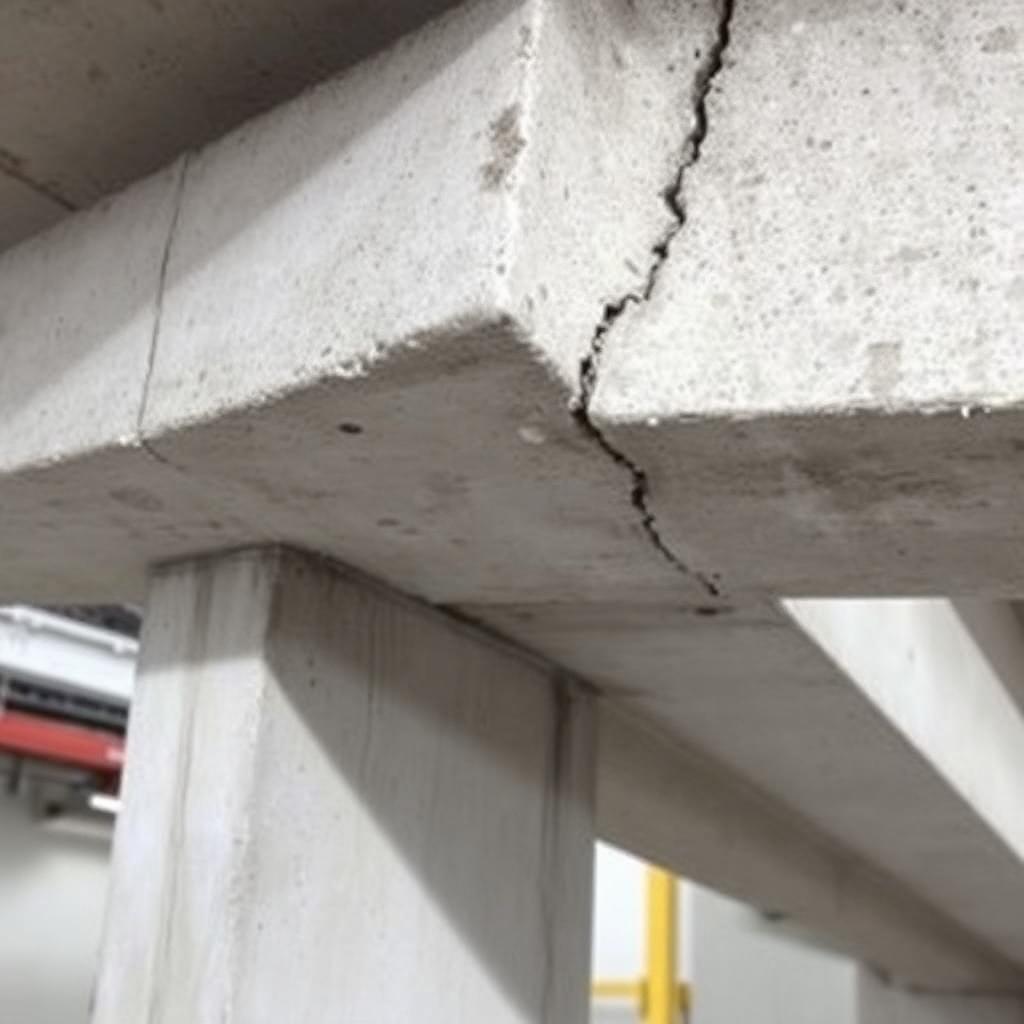
 Objective 01
Compute Vc = 2·λ·√f'c·bw·d
Basic concrete contribution (psi units).
- Why it matters
- Baseline shear capacity.
- Where it is used
- Every RC beam.
- Connects to
- ACI 318-19 22.5.5.1.
A century of steel — from concept to skyline
Concrete carries some shear; stirrups carry the rest.
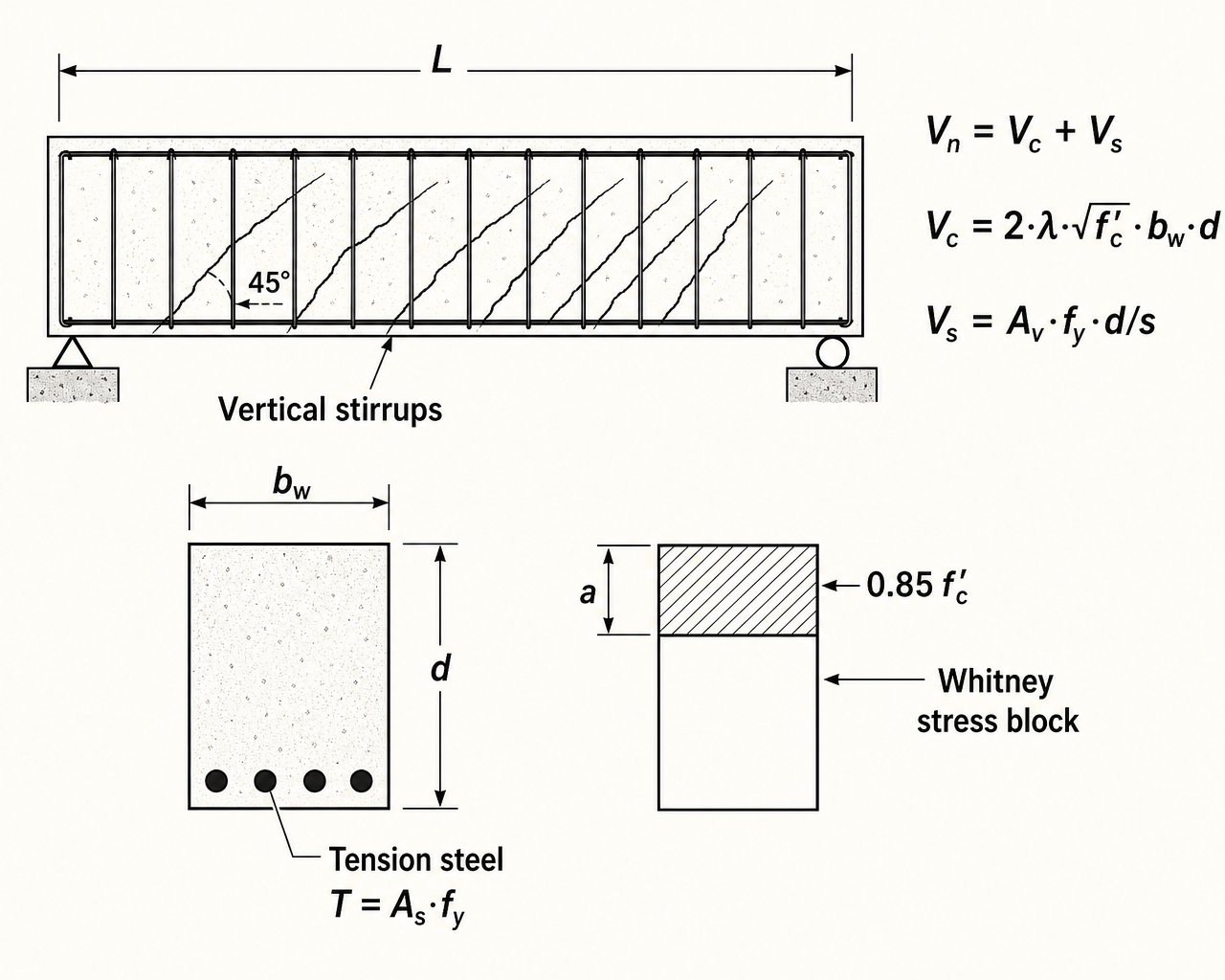
Vn = Vc + Vs; Vc = 2·λ·√f'c·bw·d; Vs = Av·fy·d/s.
Chapter 23 covers ACI 318-19 §22.5 shear: concrete contribution Vc, stirrup contribution Vs, spacing limits, and minimum shear reinforcement.
What you will be able to do after finishing Chapter 1 — and why each objective matters in practice
Objective 01Basic concrete contribution (psi units).
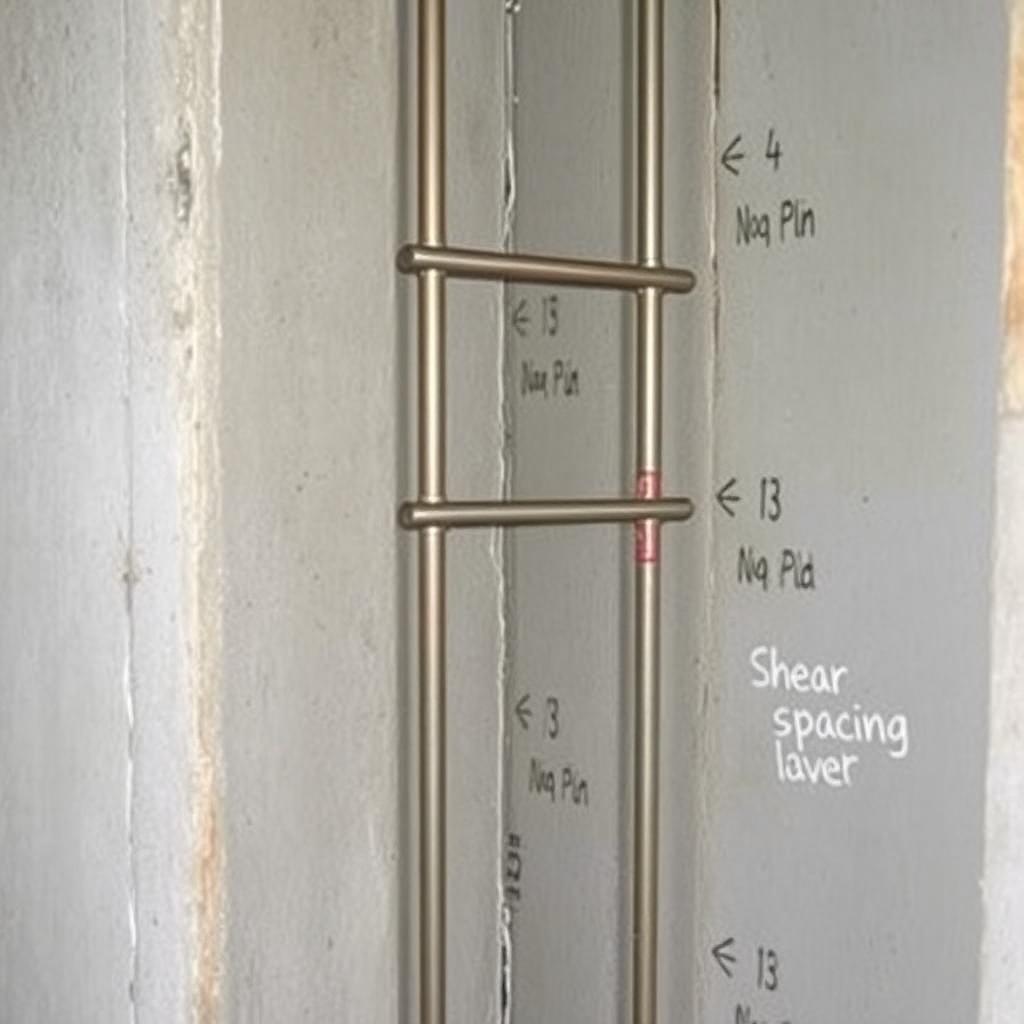 Objective 02
Vertical stirrups carry the diagonal-tension component.
Objective 03smax = d/2 (or d/4 if Vs > 4·√f'c·bw·d) and ≤ 24 in.
Objective 04Av,min = max(0.75·√f'c·bw·s/fyt, 50·bw·s/fyt) (psi).
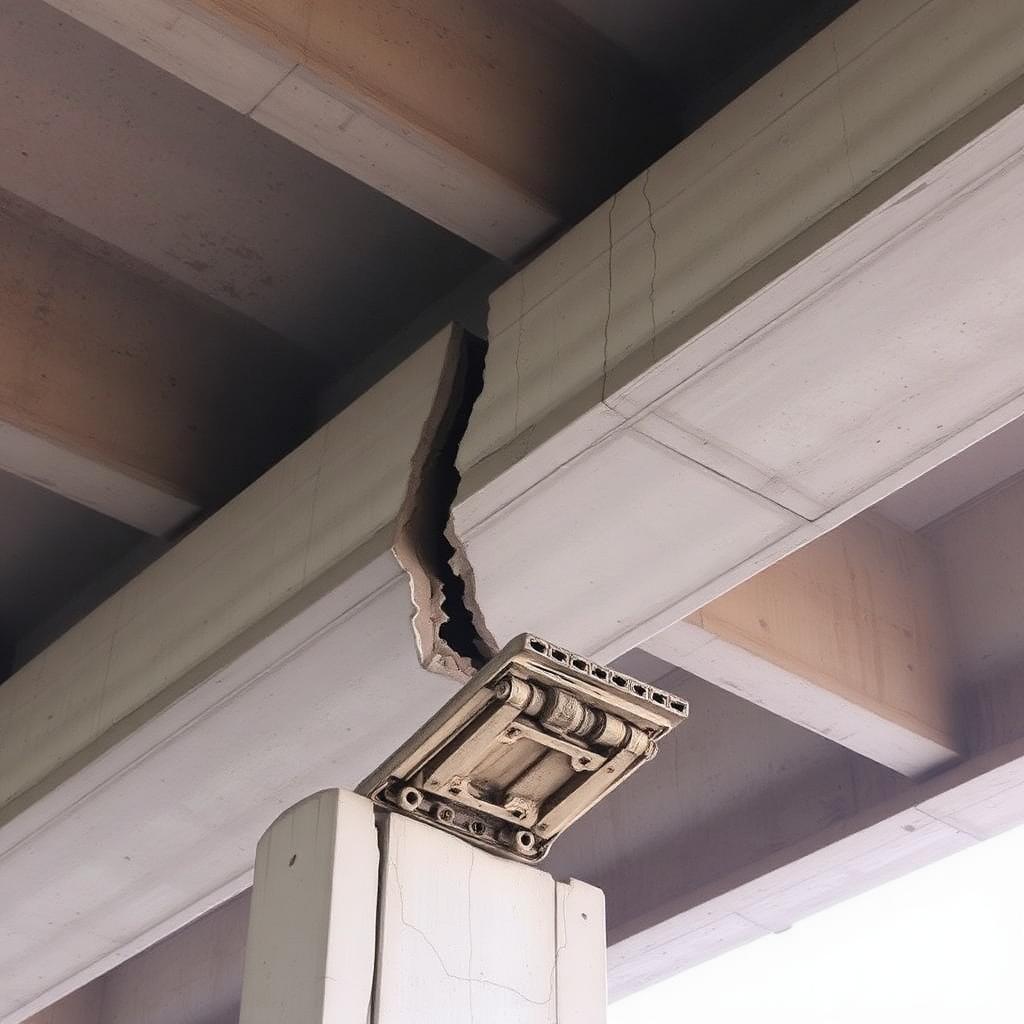 Objective 05
Shear-critical beams crack diagonally from support toward load — brittle if unreinforced.
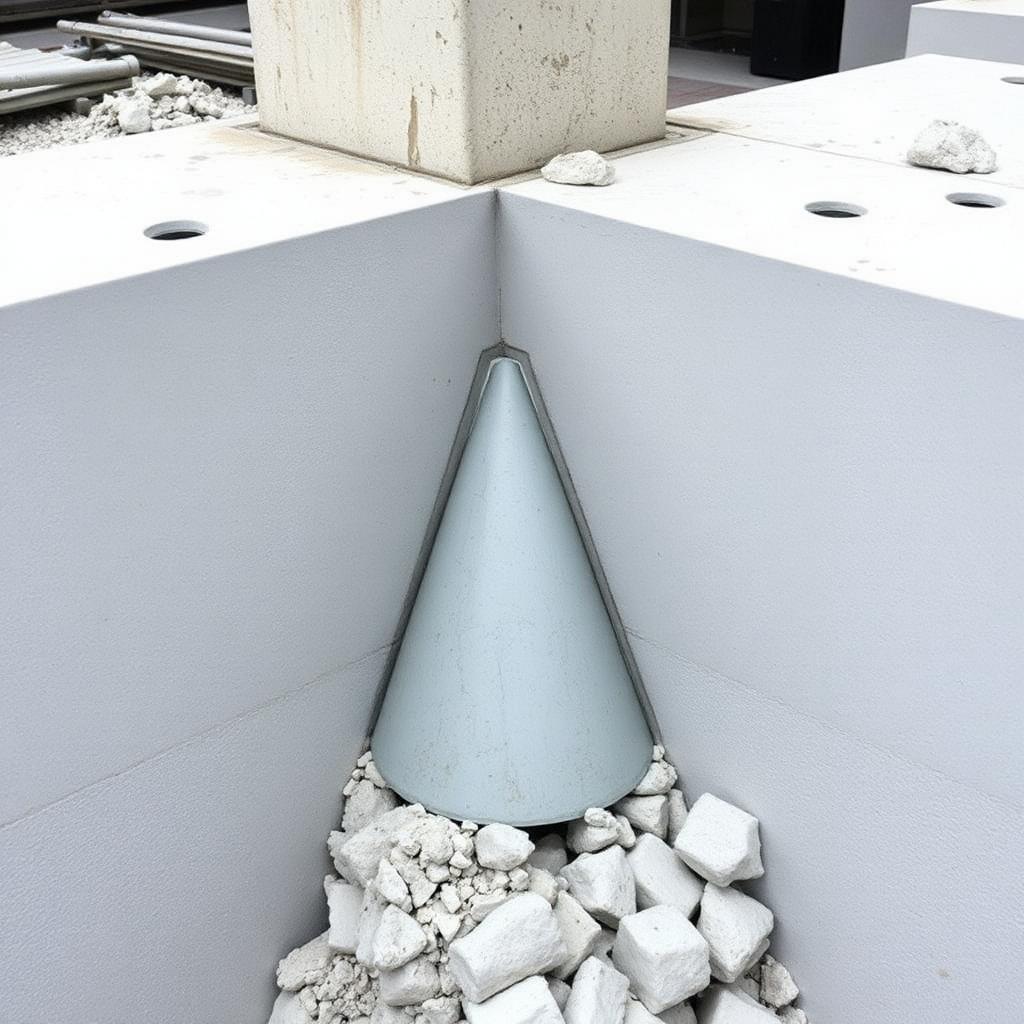 Objective 06
Flat slabs punch through at columns; ACI 22.6 governs.
What each part of a steel-frame building actually does — and why it exists
Before you design any single member, you have to see the whole system. A steel-frame building is not a collection of independent shapes bolted together — it is a deliberate load path, engineered so that every kilonewton of gravity, wind, or seismic demand has a continuous route from where it starts to the ground where the earth can resist it.
The photograph below shows a typical steel framing detail. Drag each labelled chip onto the structural element it names — the drop is only accepted when it lands inside the correct element's outlined region. A correct answer locks in with a green outline and a short explanation; a wrong answer flashes the region red, tells you what you actually hit, and returns the chip so you can try again. Press Reveal expected placements to see the reference solution (that attempt is then marked as assisted).
Why we design the way we do — six ways steel structures have failed, and what each disaster taught the profession
Every provision in AISC 360 is a scar. Behind each equation, load factor, and detailing rule is a bridge, a walkway, or a tower whose failure cost lives and rewrote the profession. The six case studies below trace the mechanisms that motivate the code you are about to learn.
Read each one as an engineer, not a spectator: identify the load, the limit state, the missing check, and the specific clause that exists today because that check was missed. When you meet those clauses again in Chapters 5–17, they will read as answers, not rules.
Brittle crack from support toward load — no warning if stirrups are missing.
Vu > φVc without adequate Vs.
Truncated-cone breaks through the slab at a column.
vu > φvc on the critical perimeter b0.
Design codes intervene at the transition from yield to instability. Everything before yield is elastic and reversible; everything after instability is a race to collapse. LRFD keeps the demand well below the first transition.
The full textbook chapter — figures, equations, and engineering narrative
Diagonal tension cracks look nothing like flexural cracks, yet stirrups are placed vertically to resist them. How do vertical stirrups actually engage a 45° crack, and why does spacing s = d/2 matter so much?
The code deliberately makes shear capacity larger than flexural capacity so a beam warns you by sagging, cracking, and deflecting before it ever fails. A shear (diagonal-tension) failure is sudden and brittle: little deflection, little cracking, then collapse. That is why φshear = 0.75 — much lower than φflexure = 0.90.
Concrete does not fail from pure shear — it fails from the diagonal tension that shear induces. Start from elementary beam theory:
An element off the neutral axis feels both f and v. The maximum principal (tensile) stress and its inclination α to the beam axis are:
Two crack patterns govern:
Test data show that concrete without web reinforcing carries an average diagonal-tension stress ≈ 2λ√f'c (psi). Multiplied by the effective web area bw·d, this is the simplified ACI expression:
A more refined expression (ACI Eq. 11-5) captures the beneficial effect of longitudinal steel ρw and the demand ratio Vud / Mu:
where ρw = As/(bw·d) and Vud/Mu is capped at 1.0. Use the simplified form for hand design and the detailed one only when you need the extra capacity (thin webs, near supports where Mu is small).
Assume the diagonal crack projects horizontally by d (a 45° crack). The number of vertical stirrups it crosses is n = d/s. Each stirrup yields at fyt with cross-area Av (= 2 × area of one bar for a U-stirrup — two legs cross the plane):
For beams supported on top with loads applied on top and no concentrated load within a distance d of the support face, ACI §9.4.22.3 lets you take Vu at a section a distance d from the face of the support, not at the support itself. Cracks in that end zone are forced to pass through the support and can't form.
Beam: bw = 14 in, d = 24 in, f'c = 3000 psi, fyt = 60,000 psi, #3 U-stirrups (Av = 0.11 in²), normal-weight (λ = 1.0). Find theoretical s for each Vu.
(a) Vu = 12,000 lb: ½·φVc = 13,803 lb > Vu ⇒ no stirrups required.
(b) Vu = 40,000 lb:
(c) Vu = 60,000 lb:
(d) Vu = 150,000 lb:
Simple beam, clear span 14 ft, wD = 4 klf, wL = 6 klf, bw = 15 in, d = 22.5 in, f'c = 4000 psi, fyt = 60,000 psi, #3 stirrups.
Summary of the two distances: x = 3.058 ft is where the required spacing loosens to 9 in; x = 5.89 ft ≈ 71 in is the last point that still needs a stirrup (Vu just reaches ½·φVc). Everything past 71 in is code-exempt. Rounding to whole inches and typical spacings-of-multiples-of-3:
Selected spacing (symmetric about centerline): 1 @ 2 in (2 in), then 7 @ 5 in (35 in), then 4 @ 9 in (36 in) — total 73 in from face.
RC shear practice
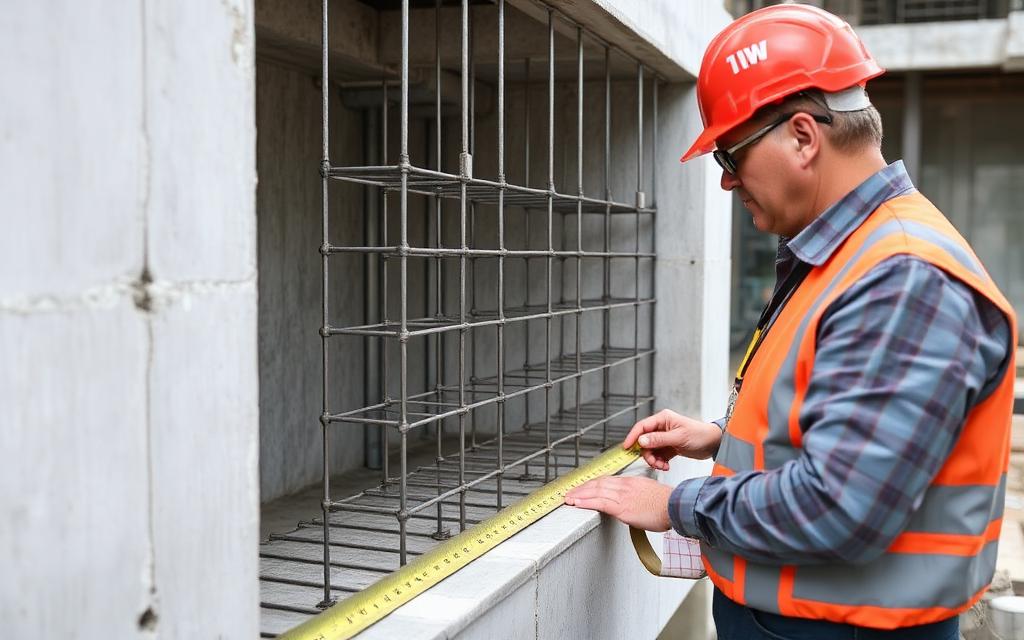
ABET / licensure link. These points map to ABET Student Outcomes 2 and 4 — engineering design within realistic constraints, and recognition of ethical and professional responsibilities. Expect NCEES FE and PE exam questions on the NSPE Code of Ethics, OSHA construction requirements, and the engineer's standard of care.
Stirrup cost
| Line item | Qty | Rate | Cost |
|---|---|---|---|
Stirrups @ 6″ (41 total) | 41 ea installed | $11 | $451 |
Stirrups @ 10″ (25 total) | 25 ea installed | $11 | $275 |
Beam depth increase to allow 10″ spacing | 1 ls | $180 | $180 |
| Estimated total | $906 | ||
Takeaway. Widening spacing saves ~$20 net here — the real gain is placement speed and less congestion at the supports.
Unit rates are representative US averages for teaching purposes. On a real project, price with current local rates (RSMeans, fabricator quotes, or contractor pricing) and state the estimate date.
Key mechanics visualised — watch the strain profile, stress block, or buckled shape evolve
Diagonal concrete strut carries Vc; vertical stirrups engage as diagonal cracks form. Vn = Vc + Vs (ACI 22.5).
Full-page reference diagrams — the visual vocabulary you will use for the rest of the course
Diagonal tension = principal tension in web.
Every crack must be crossed by a stirrup.
No warning without Vs.
Cone punches through flat slab.
Full textbook solutions — problem, theory, step-by-step, verification, interpretation
Full ACI 22.5 shear design line-by-line.
Beam bw = 12 in, d = 20 in, f'c = 4,000 psi (normal wt λ=1.0), fyt = 60 ksi. At d from support, Vu = 40 kips. Design stirrups.
Concrete resists 2√f'c·bw·d; stirrups make up the rest via Av·fy·d/s.
All three checks (Vs ≥ Vs,req, s ≤ smax, Av ≥ Av,min) satisfied.
Compute the governing variables — hints unlock as you need them
For bw=10, d=18, f'c=4000, fyt=60, Vu=25 k, find φVc and required Vs.
Solve the chapter's design task — compute each governing variable
A rectangular RC beam (bw = 12 in, d = 20 in, NWC f'c = 4000 psi, fyt = 60,000 psi) uses #3 two-legged stirrups (Av = 0.22 in²) at s = 8 in. Compute Vc, Vs, and the design shear strength φVn per ACI 318.
Select the option that satisfies every code and serviceability requirement in the brief
Select transverse reinforcement (#3 or #4 U-stirrups) and spacing for the beam above so that V_s ≥ V_s,req = 10.5 k, s ≤ s_max per ACI §9.7.6.2.2, and A_v ≥ A_v,min per ACI §9.6.3.4. Include cost/constructability judgment.
A mind map of how every concept connects
These questions reference ACI 318-19 — sections, equations, and tables are cited explicitly. Use a calculator. Each question offers a clue you may reveal before answering. Submissions are recorded to your account once signed in.
Attach your handwritten or typed step-by-step solution for this chapter's graded quiz. The instructor can download every submission. PDF only, up to 25 MB.
Your file — PDF, Word document, scanned handwriting or a photo — is read page by page like an experienced structural engineering instructor would. The scan is validated first, then your reasoning, structural model, calculations, diagrams, code basis and final answers are graded on process, not just the final number. Design work is additionally reviewed against AISC 360-22 and ACI 318-19. Partial credit applies, and one early mistake carried correctly forward is only penalized once.
NCEES-style practice with timer, equation sheet, and mastery tracking
bw=12, d=20, f'c=4000. Vc is closest to: